• HOME
  • COMPANY

    Focus on manufacturing various types of brakes

    Having been deeply involved in the industry for thirty years, we provide you with various types of brake and friction plate products

    SERVICE
  • BUSINESS
  • APPLICATIONS

    Focus on manufacturing various types of brakes

    Having been deeply involved in the industry for thirty years, we provide you with various types of brake and friction plate products

    SERVICE
  • NEWS

    Focus on manufacturing various types of brakes

    Having been deeply involved in the industry for thirty years, we provide you with various types of brake and friction plate products

    SERVICE
  • CONTACT

    Focus on manufacturing various types of brakes

    Having been deeply involved in the industry for thirty years, we provide you with various types of brake and friction plate products

    SERVICE
    CONTACT NUMBER 0391-7543530
    E-MAIL jzlinrui@163.com
    ADDRESS Jiaozuo Brake Industrial Park
  • Tel:0391-7543530 中文

    Industry Trends

    --- Years of sales and experience in wind power, lifting, metallurgy, ports, and water conservancy related products and services

    LOCATION:HOMEIndustry Trends
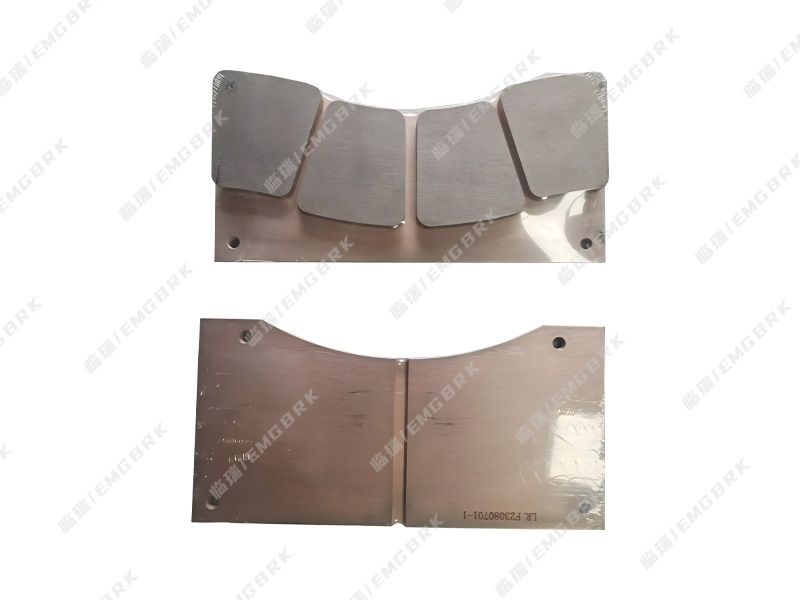
    SHI252 hydraulic disc brake pads
    TIME:2024-11-21
     
    CLICK:1176次
    Abstract:  The SHI252 hydraulic disc brake pad elevator, as the main tool for transporting materials in coal mines, undertakes the main task of coal mine transportation. Its normal operation is the prerequisite for ensuring safe production, and whether it can operate normally is the the final say of brake shoe clearance. Too large or too small brake shoe clearance will affect the brake system of the elevator, so the brake shoe clearance can determine whether the elevator can operate normally.  However, in normal production, it is quite normal for the brake shoes of the hoist to wear out quickly. If you do not notice at this time, or if the wear rate of the brake shoes accelerates and you have not had time to replace them, it will inevitably affect the normal operation of the hoist, and the incidence of safety accidents will greatly increase.  Therefore, in view of the rapid wear and tear of the hoist brake shoes, installing brake shoe protection is an effective means to avoid safety accidents. The reason why we are so confident in coming to this conclusion is because of the unique features of brake shoe protection:  1、 Gap detection of gates  Detection principle: By using a displacement sensor, a distance of 0-10mm is converted into a voltage signal of 010V, which is transmitted to the analog input module of the PLC. Due to the impossibility of tightly adhering the end face of the sensor to the brake disc, a certain distance is set to the 0 position, such as setting 4mm as the 0 position. When in the closed state, adjust the displacement sensor so that the sensor end face is approximately 4mm away from the brake disc, and set it as 0. When the gate is opened, if the detected distance is 5. Imm, then the gate gap is 5.1mm-4.0mm=1.1mm. However, after long-term operation, there will be a certain amount of wear on the brake shoes. Assuming the wear value of the brake shoes is 1.2mm, at this time, when in the closed state, the distance detected by the sensor is Imm 1.2mm=2.8mm, while when the brake is opened, the distance detected by the sensor is 5.1mm+1.2mm=6.3mm. At this time, the gap between the brake shoes is 6.3mm-4.0mm=2.3mm. (It can be seen that both spring fatigue and brake shoe wear will increase the brake clearance). The above calculations are all completed in the PLC controller. In actual use, simply adjust the sensor to * * * 0 position in the closed state  2、 Brake shoe wear detection  The detection principle of brake shoe wear: When the output oil pressure of the hydraulic station is detected as 0 or residual pressure, if the value of the distance sensor is less than 0 (negative), it is considered that the value is caused by brake shoe wear. The reverse of the change value is the wear amount of the brake shoe. (This value may also be caused by the bias of the brake disc, and the impact of the bias needs to be deducted in the specific fault diagnosis).  3、 Brake disc deflection detection  Calculation of brake disc deflection: Fixed to the brake seat by a distance sensor, the winch detects the maximum and minimum values of the distance during operation, and the difference between the maximum and minimum values is the deflection.  How about it? After reading the above content, you will understand why the editor confidently said that "installing brake shoe protection is an effective means to avoid safety accidents." It is recommended that coal mine operators always tighten the safety string, nip accidents in the bud, and start with installing brake shoe protection
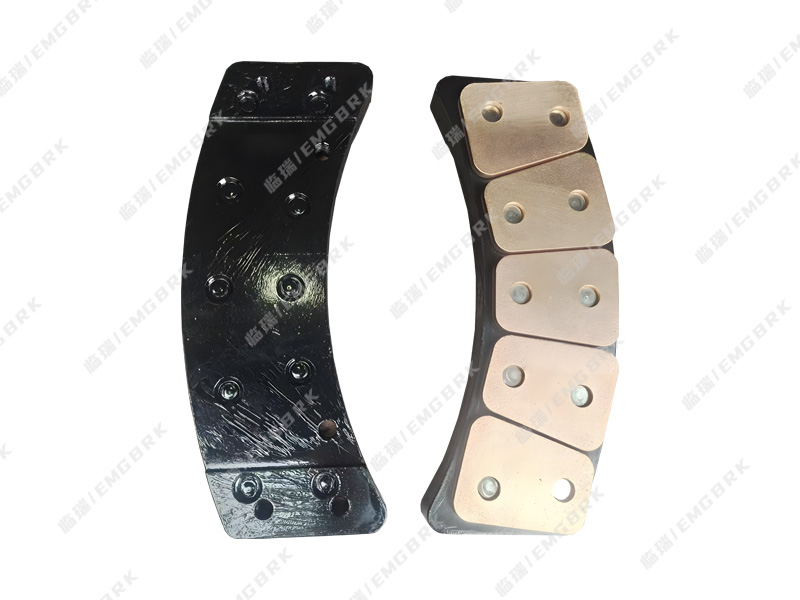

      The SHI252 hydraulic disc brake pad elevator, as the main tool for transporting materials in coal mines, undertakes the main task of coal mine transportation. Its normal operation is the prerequisite for ensuring safe production, and whether it can operate normally is the the final say of brake shoe clearance. Too large or too small brake shoe clearance will affect the brake system of the elevator, so the brake shoe clearance can determine whether the elevator can operate normally.

      However, in normal production, it is quite normal for the brake shoes of the hoist to wear out quickly. If you do not notice at this time, or if the wear rate of the brake shoes accelerates and you have not had time to replace them, it will inevitably affect the normal operation of the hoist, and the incidence of safety accidents will greatly increase.

    7

      Therefore, in view of the rapid wear and tear of the hoist brake shoes, installing brake shoe protection is an effective means to avoid safety accidents. The reason why we are so confident in coming to this conclusion is because of the unique features of brake shoe protection:

      1、 Gap detection of gates

      Detection principle: By using a displacement sensor, a distance of 0-10mm is converted into a voltage signal of 010V, which is transmitted to the analog input module of the PLC. Due to the impossibility of tightly adhering the end face of the sensor to the brake disc, a certain distance is set to the 0 position, such as setting 4mm as the 0 position. When in the closed state, adjust the displacement sensor so that the sensor end face is approximately 4mm away from the brake disc, and set it as 0. When the gate is opened, if the detected distance is 5. Imm, then the gate gap is 5.1mm-4.0mm=1.1mm. However, after long-term operation, there will be a certain amount of wear on the brake shoes. Assuming the wear value of the brake shoes is 1.2mm, at this time, when in the closed state, the distance detected by the sensor is Imm 1.2mm=2.8mm, while when the brake is opened, the distance detected by the sensor is 5.1mm+1.2mm=6.3mm. At this time, the gap between the brake shoes is 6.3mm-4.0mm=2.3mm. (It can be seen that both spring fatigue and brake shoe wear will increase the brake clearance). The above calculations are all completed in the PLC controller. In actual use, simply adjust the sensor to * * * 0 position in the closed state

      2、 Brake shoe wear detection

      The detection principle of brake shoe wear: When the output oil pressure of the hydraulic station is detected as 0 or residual pressure, if the value of the distance sensor is less than 0 (negative), it is considered that the value is caused by brake shoe wear. The reverse of the change value is the wear amount of the brake shoe. (This value may also be caused by the bias of the brake disc, and the impact of the bias needs to be deducted in the specific fault diagnosis).

      3、 Brake disc deflection detection

      Calculation of brake disc deflection: Fixed to the brake seat by a distance sensor, the winch detects the maximum and minimum values of the distance during operation, and the difference between the maximum and minimum values is the deflection.

      How about it? After reading the above content, you will understand why the editor confidently said that "installing brake shoe protection is an effective means to avoid safety accidents." It is recommended that coal mine operators always tighten the safety string, nip accidents in the bud, and start with installing brake shoe protection


    Related Information
    Where are the friction plates used for wind turbine yaw brakes

    Where are the friction plates used for wind turbine yaw brakes

      The friction plates of wind turbine yaw brakes are mainly used in the yaw braking system of wind turbines. The following is a detailed answer about the application of friction plates in wind power yaw brakes:  Application scenarios  The friction plate of wind turbine yaw brake is mainly used in the yaw process of wind turbines, playing a role in braking and stabilizing the unit. When the wind turbine needs to adjust its direction to align with the main wind direction, the yaw brake will be activated. Through the friction between the friction plate and the brake disc, the necessary damping torque is generated to enable the unit to smoothly and accurately complete the yaw action.  working principle  In wind turbines, the yaw brake is usually driven by a hydraulic system. When braking is required, the hydraulic system provides pressure to clamp the brake caliper body against the friction plate, which then comes into close contact with the brake disc, generating friction torque. This friction torque will hinder the rotation of the unit, allowing it to maintain a stable position. At the same time, by adjusting the pressure of the hydraulic system, the magnitude of the friction torque can be controlled, thereby achieving precise control of the yaw speed and yaw position of the unit.  Usage requirements  Friction coefficient: The friction coefficient of the friction plate of the wind turbine yaw brake is a key parameter. A suitable friction coefficient can ensure that the brake can provide sufficient braking torque while avoiding excessive wear on the brake disc and friction pads during operation.  2 Wear resistance: Due to the frequent operation of yaw brakes in wind turbines, friction plates must have good wear resistance. This can extend the service life of the friction plate, reduce the frequency of replacement, and thus lower maintenance costs.  Stability: During the braking process, the friction plate needs to maintain stable friction performance. This requires friction plate materials to have good thermal and chemical stability, and be able to work normally in harsh environments such as high temperature, high pressure, and humidity.  4 Adaptability: Different wind turbines may have different requirements for the size, shape, and material of the friction plates. Therefore, when selecting friction pads, it is necessary to ensure their adaptability to ensure that the brake can work properly and meet the braking requirements of the unit.  Maintenance and replacement  In order to ensure the normal operation of the friction plate of the wind turbine yaw brake, it is necessary to regularly inspect and maintain it. If severe wear or other faults are found in the friction plate, it needs to be replaced or repaired in a timely manner. When replacing the friction plate, it is necessary to ensure that the size, shape, and material of the new friction plate are consistent with the original friction plate, and strictly follow the manufacturer's installation guide for installation and adjustment.  In summary, the friction plates of wind turbine yaw brakes play a crucial role in wind turbines. They ensure the efficiency and safety of wind power generation by providing necessary braking torque to ensure that the unit can smoothly and accurately complete the yaw action.

    SHI252 hydraulic disc brake pads

    SHI252 hydraulic disc brake pads

      The SHI252 hydraulic disc brake pad elevator, as the main tool for transporting materials in coal mines, undertakes the main task of coal mine transportation. Its normal operation is the prerequisite for ensuring safe production, and whether it can operate normally is the the final say of brake shoe clearance. Too large or too small brake shoe clearance will affect the brake system of the elevator, so the brake shoe clearance can determine whether the elevator can operate normally.  However, in normal production, it is quite normal for the brake shoes of the hoist to wear out quickly. If you do not notice at this time, or if the wear rate of the brake shoes accelerates and you have not had time to replace them, it will inevitably affect the normal operation of the hoist, and the incidence of safety accidents will greatly increase.  Therefore, in view of the rapid wear and tear of the hoist brake shoes, installing brake shoe protection is an effective means to avoid safety accidents. The reason why we are so confident in coming to this conclusion is because of the unique features of brake shoe protection:  1、 Gap detection of gates  Detection principle: By using a displacement sensor, a distance of 0-10mm is converted into a voltage signal of 010V, which is transmitted to the analog input module of the PLC. Due to the impossibility of tightly adhering the end face of the sensor to the brake disc, a certain distance is set to the 0 position, such as setting 4mm as the 0 position. When in the closed state, adjust the displacement sensor so that the sensor end face is approximately 4mm away from the brake disc, and set it as 0. When the gate is opened, if the detected distance is 5. Imm, then the gate gap is 5.1mm-4.0mm=1.1mm. However, after long-term operation, there will be a certain amount of wear on the brake shoes. Assuming the wear value of the brake shoes is 1.2mm, at this time, when in the closed state, the distance detected by the sensor is Imm 1.2mm=2.8mm, while when the brake is opened, the distance detected by the sensor is 5.1mm+1.2mm=6.3mm. At this time, the gap between the brake shoes is 6.3mm-4.0mm=2.3mm. (It can be seen that both spring fatigue and brake shoe wear will increase the brake clearance). The above calculations are all completed in the PLC controller. In actual use, simply adjust the sensor to * * * 0 position in the closed state  2、 Brake shoe wear detection  The detection principle of brake shoe wear: When the output oil pressure of the hydraulic station is detected as 0 or residual pressure, if the value of the distance sensor is less than 0 (negative), it is considered that the value is caused by brake shoe wear. The reverse of the change value is the wear amount of the brake shoe. (This value may also be caused by the bias of the brake disc, and the impact of the bias needs to be deducted in the specific fault diagnosis).  3、 Brake disc deflection detection  Calculation of brake disc deflection: Fixed to the brake seat by a distance sensor, the winch detects the maximum and minimum values of the distance during operation, and the difference between the maximum and minimum values is the deflection.  How about it? After reading the above content, you will understand why the editor confidently said that "installing brake shoe protection is an effective means to avoid safety accidents." It is recommended that coal mine operators always tighten the safety string, nip accidents in the bud, and start with installing brake shoe protection

    Common faults and troubleshooting techniques of electromagnetic hydraulic thrusters

    Common faults and troubleshooting techniques of electromagnetic hydraulic thrusters

      When using electromagnetic hydraulic thrusters, it is inevitable that some problems may occur. In response to this, how should we handle and eliminate their faults? Next, I will explain it to everyone, hoping it can be helpful to you.  After connecting the electromagnet, the armature cannot be pulled up. It is necessary to check whether the mechanical part of the electromagnetic brake is intact.  2. Electromagnets make noise. AC electromagnets often produce noise due to complete attraction, uneven surface, or broken short-circuit rings. Such faults can be addressed by eliminating mechanical jamming, replacing the iron core or short-circuit ring, etc.  3. The temperature of the electromagnet coil is too high, which can be caused by incomplete attraction of the AC electromagnet, excessive current in the series coil, or too frequent power supply, all of which can cause the temperature of the electromagnetic brake electromagnet coil to be too high.  4. After the electromagnet is powered off, the armature does not fall, and the reasons for such faults are mostly due to brake mechanical jamming or frozen lubricating oil. The residual magnetism of the DC electromagnet is too large, and the non-magnetic gasket is worn.  In summary, these are the common faults and troubleshooting techniques of electromagnetic hydraulic thrusters. I hope they can be helpful to you. That's all for this knowledge, and I hope it can be helpful to you.

    24-hour welcome for consultation

    0391-7543530

    message
    ewm

    Follow us

    24H

    Service Hotline:

    0391-7543530

    E-mail:jzlinrui@163.com

    Address:Jiaozuo Brake Industrial Park

    CopyRight © 2023 Jiaozuo Linrui Brake Co., Ltd 豫ICP备18010205号-7